
'/%3E%3C/svg%3E)
'/%3E%3Cpath%20fill='%23b2b2b2'%20d='M241%20382q0%2016%2017%2026%2017%2011%2042%2011t42-11q16-11%2017-26V269H241'/%3E%3Cpath%20fill='%239f7e00'%20d='M241%20379q0%2014%208%2023%209%209%2021%209%2014%200%2021-9%209-9%209-23V269h-59'/%3E%3Cpath%20d='M241%20339v-70h59v110q0%2014-9%2023l-6%205v-68h-15v72q-8%200-14-4v-68zm59%2040c0%2022%2015%2032%2029%2032%2021%200%2030-18%2030-32v-40h-59'/%3E%3Cpath%20fill='%239f7e00'%20d='M266%20277v5h2v12h-3v-5h2v-5h-9v5h2v5h-4v9h3v18h-5v10h34v-10h-5v-18h3v-9h-4v-5h2v-5h-9v5h2v5h-3v-12h2v-5zm42%20101q0%2010%206%2017%206%206%2015%207%2010-1%2016-7%206-7%206-17v-29h-43'/%3E%3Ccircle%20fill='%230044ad'%20cx='329.5'%20cy='372'%20r='6'/%3E%3Cellipse%20fill='%230044ad'%20cx='300'%20cy='340'%20rx='16'%20ry='21'/%3E%3C/svg%3E)
Resurfacing
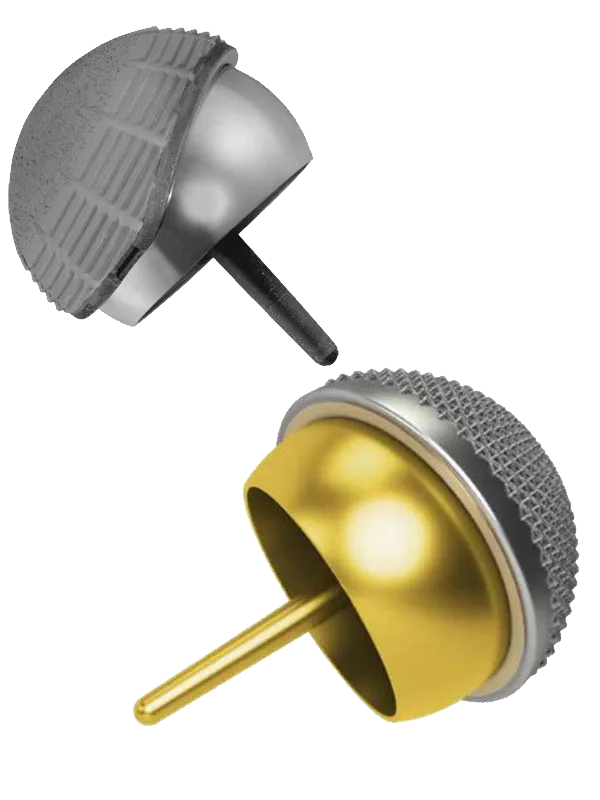
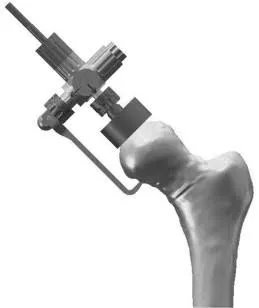
«Resurfacing» is a surgical procedure that involves resurfacing a joint eroded by osteoarthritis. This resurfacing is performed using metal prosthetic implants. The discovery and surgical use of new metals, such as tantalum, have significantly increased the success rate of this type of treatment.
The end result is a hip that is anatomically and biomechanically more similar to the patient’s natural joint and offers better stability, flexibility, and range of motion. The risk of dislocation is minimal. A high level of activity is achieved—greater than with conventional arthroplasty.
This type of implant preserves more bone and, as a result, ensures greater mobility than traditional surgery.
Recupere su ritmo de vida: Pioneros en Resurfacing de Cadera
We know that living with hip pain not only limits your movement, but also slows you down in your daily life and keeps you from the activities you love. If you’re young or lead an active lifestyle, hip resurfacing is an advanced option designed with your future in mind.
Unlike conventional prosthetics, this technique preserves as much of your natural bone as possible and respects the original anatomy of your joint, resulting in a much more natural gait, greater stability, and the freedom to return to sports and your daily routine without restrictions.
At our practice, we not only perform surgery with the utmost precision; we also support you with empathy and care every step of the way toward your recovery, restoring your confidence to move again without pain and with the assurance that you are in the expert hands your health deserves.
Commitment to excellence and the quality of materials
The durability and performance of a prosthesis depend directly on the technical quality of its components. For this reason, we work exclusively with leading international companies in biotechnology and medical engineering, such as Zimmer Biomet, Smith & Nephew, Medacta, Waldemar Link, and Medcomtech.
We carefully select state-of-the-art materials—such as high-strength alloys, advanced ceramics, and ultra-high-density polyethylene—tailoring each implant to the anatomy and activity level of each patient to ensure maximum biocompatibility, stability, and longevity of the joint.